


Skyroot Aerospace completes first orbital launch with Vikram-1
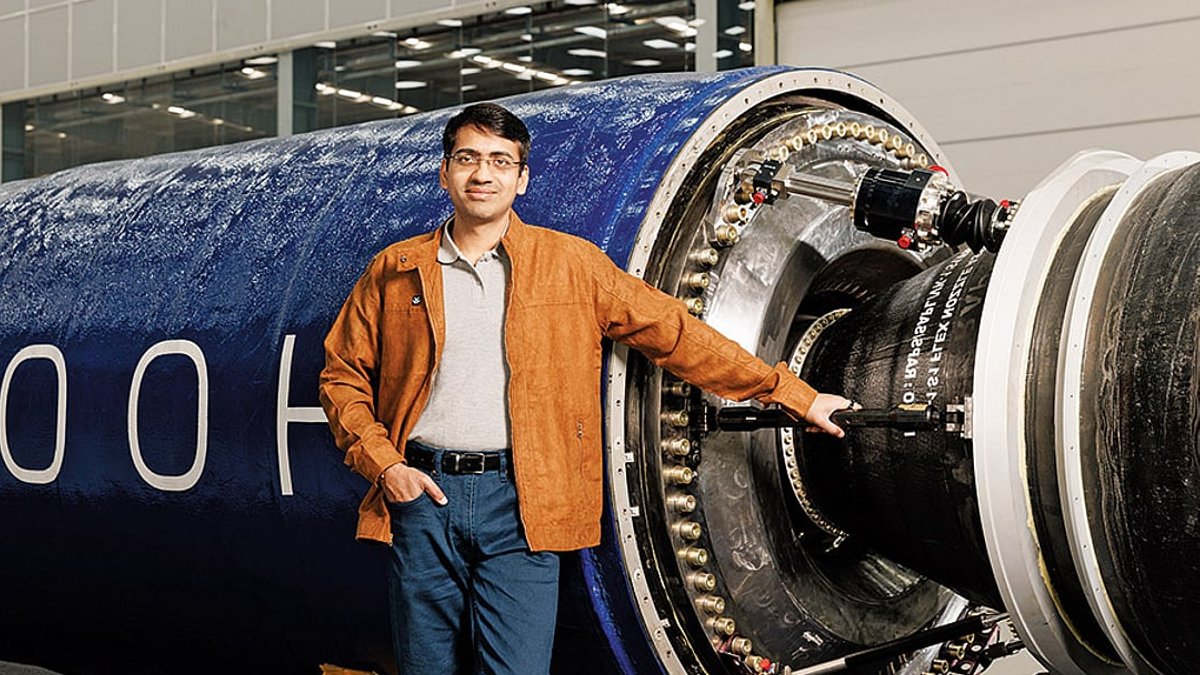
Skyroot Aerospace co-founders had worked on launch vehicles at ISRO and understood both the technology’s complexity and India’s decades of space heritage. Their business thesis was simple: small satellite growth would drive demand for flexible, responsive, dedicated orbital access, while launch capacity would remain constrained.
Funding a rocket with no rocket
Early fundraising proved as difficult as building the technology itself. Skyroot proposed an orbital-class rocket with no hardware to show, no revenue, and no regulatory framework allowing private launches. Investors couldn’t benchmark against existing companies because none existed. Every rupee mattered during tight runway periods, forcing constant prioritisation of essential technical milestones.
The first investors backed founders and the engineering approach rather than conventional metrics. Each successful engine test, technology demonstration, and eventually Vikram-S in 2022 reduced perceived risk. In deep tech, capital follows credible technical execution.
Policy reform opens doors
The 2020 space-sector liberalisation was transformational. Previously, private participation was largely restricted to supplying government programmes. The creation of IN-SPACe provided an institutional mechanism for private companies to access ISRO facilities, expertise, and infrastructure while creating clearer authorisation paths.
Testing facilities, launch infrastructure, tracking networks, and range systems are enormously capital intensive. Liberalisation allowed Skyroot to move faster without duplicating existing national infrastructure. Support from ISRO and IN-SPACe enabled Vikram-S and subsequent Vikram-1 development.
ISRO remains one of India’s biggest competitive advantages for the private space ecosystem. With over six decades of knowledge, infrastructure, and human capital, private companies can build on that foundation rather than starting from zero. The relationship is becoming complementary: ISRO focuses on national missions and strategic capabilities while private companies build scalable commercial products.
Reaching orbit with Vikram-1 marks a shift from development to commercialisation. The challenge now is building a reliable, repeatable, and scalable launch business focused on the global small-satellite market. Satellite operators need flexibility over launch timing, destination, and speed to orbit.
Read Also: India’s corporate boards need deeper reforms beyond diversity
From here, priorities include increasing launch cadence, expanding manufacturing capacity, driving reliability through repeated missions, and progressively serving more customer requirements. Skyroot aims to conduct one launch per month eventually, requiring an industrial system around manufacturing, supply chains, testing, launch operations, and customer integration. Commercialisation means turning rocket launches from individual engineering projects into a repeatable service.
Building toward monthly launches
Customer demand centers on dedicated launches that offer flexibility in timing, destination, and speed to orbit. Rideshare models often fall short of these needs, leaving a gap for responsive, tailored access. The Vikram series is designed to fill that space, with one launch per month as a long-term target.
Achieving this cadence requires a full industrial system. Skyroot is building processes and partnerships to support this transformation, turning each launch into a repeatable service rather than a standalone project.
Commercialisation means serving a growing list of global customers with consistent performance. Space is becoming infrastructure for the global economy, supporting sectors like agriculture, logistics, defence, and climate intelligence. Indian companies have strong foundations: engineering talent, institutional knowledge from ISRO, and competitive development costs. However, global success depends on technology, reliability, speed, and cost—not nationality alone.
India’s emerging private space sector
Today, startups are active across launch vehicles, satellites, propulsion, Earth observation, communications, and space situational awareness. This diversification signals a maturing ecosystem with broad-based innovation.
India’s small share of the global space economy today is seen less as a weakness and more as untapped potential. Converting existing capability into commercial scale is the next major challenge for the industry.
The path forward involves creating an entire industrial ecosystem encompassing manufacturing, supply chains, testing facilities, launch operations, and customer integration to support regular launch services.


